Why an Oversized Air Conditioner Makes an Arkansas House Feel Clammy
A bigger air conditioner sounds like the safe choice, but oversizing is the most common reason a Saline County house stays humid even while it's cold.
September 3, 2026 · 3 min read
If your air conditioner is bigger than your house actually needs, you already know the symptoms even if you don't know the cause. The house cools fast, almost too fast. The thermostat hits the set point in ten minutes flat. And yet the air still feels damp. Floors feel cool and slightly sticky. The upstairs bedroom never quite catches up with the living room. People who live with an oversized system usually describe it the same way: it's cold, but it doesn't feel right.
Two Jobs, Not One
Here's what's actually happening. An air conditioner does two separate jobs at the same time. It lowers the temperature of the air, which is called sensible cooling, and it pulls moisture out of the air, which is called latent cooling. A correctly sized system runs long enough on a Saline County afternoon to do both jobs properly. An oversized system blasts the thermostat down to temperature so fast that it shuts off before it has spent enough time pulling humidity out of the air. The compressor never gets into its steady rhythm. It's off again before the coil has done its slower, quieter job of wringing water out of the air stream.
Short Cycling Wears Out the Parts That Cost the Most
That start-stop pattern has a name: short cycling. It is a comfort problem, and it is also a wear problem. Every time a compressor starts, it draws a surge of current well above its running amperage. A correctly sized unit might cycle on and off four or five times an hour on a hot day. An oversized one can cycle far more often, which means more starts, more electrical stress, and more wear on the exact components that are expensive to replace: the compressor, the contactor, the start components. A system that's too big for the house isn't running less. It's running harder, more often, in shorter bursts, which is the worst combination for equipment life.
Bigger has never meant better with cooling equipment, and it isn't a matter of "it can't hurt to have more capacity." An oversized unit almost always costs more up front, cycles more often, and leaves the house clammy on the exact days it's working hardest. The house gets cold air but keeps its humidity, which is why a room can read 71 degrees on the thermostat and still feel uncomfortable enough that someone reaches for a sweater at the exact temperature that should feel comfortable.
What Correct Sizing Actually Looks At
Correct sizing isn't a guess and it isn't just square footage on a tape measure. It accounts for the direction the house faces, how much glass is on the west side catching afternoon sun, insulation levels in the attic, how tight the ductwork is, and how many people usually occupy the space. Two houses that are both 2,000 square feet in Benton can call for genuinely different tonnage depending on those details. A one-size answer based only on floor area is exactly how homes end up with equipment that's a size and a half too big, because "when in doubt, go bigger" has been bad advice in this trade for decades and it's still the most common mistake homeowners get talked into.
What correct sizing looks like in practice is a load calculation that actually looks at the house, not a number pulled from the old unit's nameplate and installed again because it's the path of least resistance. If the last system was oversized, replacing it with an identical unit just repeats the same short-cycling pattern in a brand new box. The house deserves a system sized for what it actually is, not for what was installed last time by whoever was in a hurry.
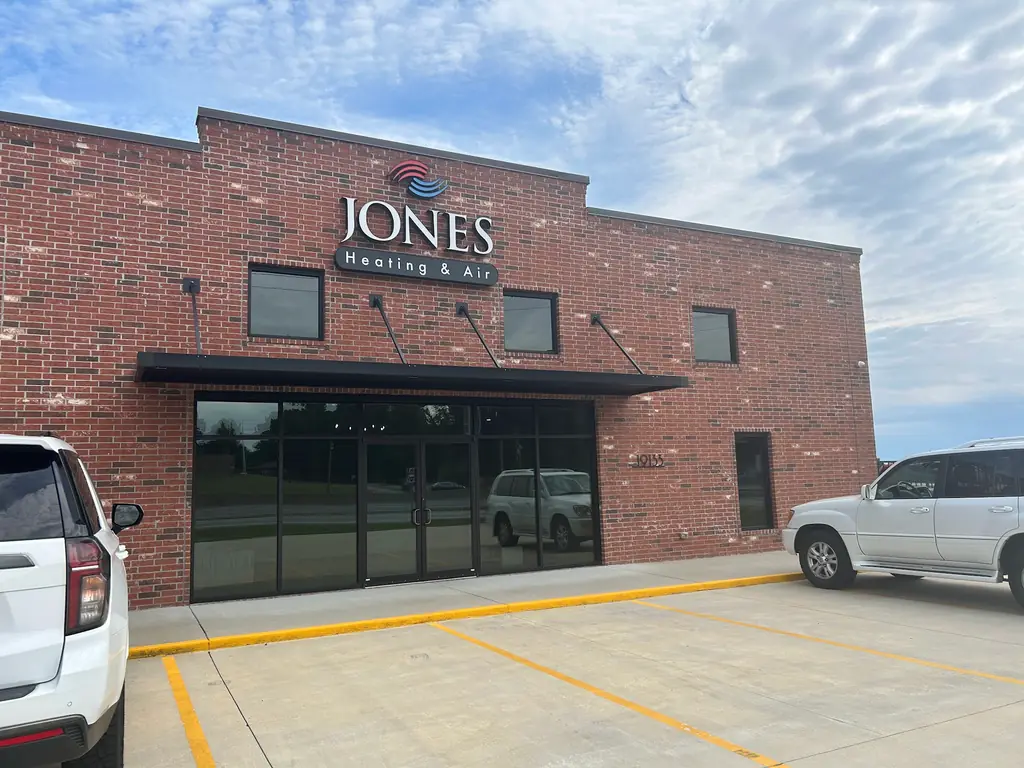
If your air conditioner is cooling the house fast but the air still feels heavy, or if it seems to run in short bursts all afternoon rather than one long steady cycle, that's worth a second look rather than something to live with. Jones Heating & Air has been sizing and installing systems across Benton, Bryant, Bauxite, Conway, Hot Springs, Salem and the rest of Saline County since 1985, and free estimates on new units mean there's no cost to finding out whether the equipment in your house is actually right for it. Give the office a call at (501) 778-3324, Monday through Friday from 7:00 AM to 4:30 PM, and if the system quits altogether outside those hours, the 24 hour emergency line is there for exactly that.
Jones Heating & Air — (501) 778-3324
Call (501) 778-3324More articles
The Capacitor: The Small Part Behind Most No-Cool Calls
Most sudden no-cool calls trace back to one inexpensive part in the outdoor unit, and knowing the warning signs can save a system from a much bigger repair.
What to Check in the First Ten Minutes When Your AC Quits
Before you call anyone, a handful of one-minute checks can tell you whether your air conditioner needs a technician or just a reset.